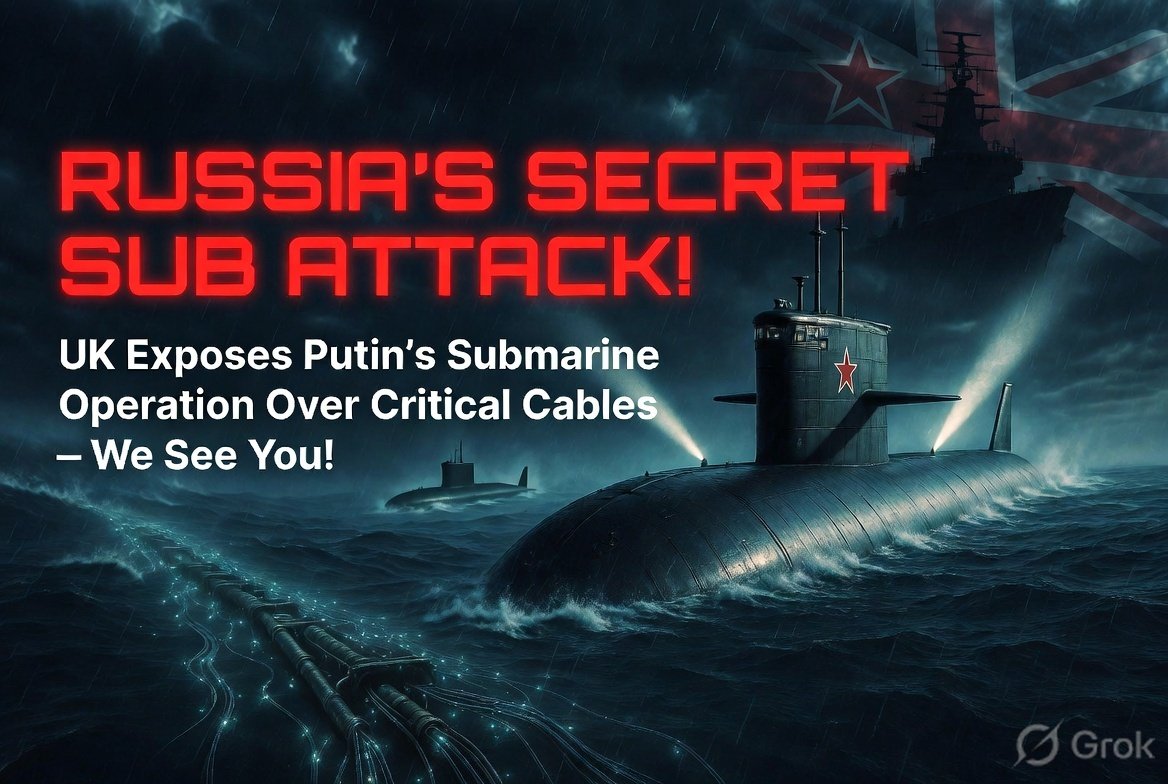
The global security landscape is shifting rapidly, and recent statements from the United Kingdom have raised serious concerns. According to UK officials, Russia has been conducting submarine operations near critical underwater infrastructure, including communication cables and energy pipelines.
This revelation is more than just geopolitical rhetoric—it highlights a growing vulnerability in the world’s most essential systems. From internet connectivity to energy supply chains, underwater infrastructure forms the backbone of modern civilization.
In this article, we’ll break down what these submarine operations mean, why they matter, and how governments and industries can respond effectively.
Understanding the Allegation: What the UK Claims
UK defense officials have indicated that Russian submarines and specialized vessels have been operating in proximity to undersea cables and pipelines. These activities are believed to include:
- Mapping underwater infrastructure
- Monitoring data transmission routes
- Identifying weak points in pipelines
- Potentially preparing for sabotage or disruption
While no direct attack has been confirmed, the concern lies in the capability and intent behind these operations.
Why Undersea Infrastructure Matters
Undersea cables and pipelines are critical to global stability:
- 95% of global internet traffic flows through submarine cables
- Oil and gas pipelines supply energy across continents
- Financial transactions rely on uninterrupted connectivity
A disruption could impact economies, national security, and daily life on a massive scale.
The Strategic Importance of Submarine Operations
Submarine operations are not new, but their role has evolved significantly in modern warfare.
From Military Surveillance to Hybrid Warfare
Traditionally, submarines were used for:
- Intelligence gathering
- Strategic deterrence
- Naval combat
Today, they are increasingly part of hybrid warfare strategies, which combine conventional military tactics with cyber and infrastructure threats.
Why Russia Is Under Scrutiny
Russia has invested heavily in deep-sea capabilities, including specialized submarines designed for seabed operations. Western intelligence agencies believe these assets can:
- Interact directly with underwater cables
- Deploy sensors or devices
- Potentially disrupt communication systems
This has led to heightened monitoring by NATO allies and increased naval patrols.
Key Risks to Global Security
The possibility of interference with underwater infrastructure introduces several major risks:
1. Internet Disruption
A single damaged cable can slow or disrupt connectivity across regions. Multiple disruptions could:
- Cripple financial markets
- Interrupt cloud services
- Affect communication networks globally
2. Energy Supply Threats
Pipelines are essential for transporting oil and gas. Damage to these systems can:
- Trigger energy shortages
- Increase fuel prices
- Disrupt industrial operations
3. Economic Instability
Modern economies rely heavily on real-time data and energy supply. Any interruption could:
- Halt international trade
- Impact stock exchanges
- Create panic in global markets
How Vulnerable Are Undersea Cables and Pipelines?
Despite their importance, underwater infrastructure is surprisingly vulnerable.
Limited Protection
- Most cables are only lightly shielded
- Deep-sea areas are difficult to monitor
- Repairs can take days or even weeks
Vast Coverage Area
Submarine cables span thousands of kilometers, making constant surveillance nearly impossible.
Civilian Ownership
Many cables are owned by private companies, not governments, which complicates coordinated security efforts.
Global Response and Rising Tensions
Following the UK’s statement, several countries have increased their focus on protecting underwater assets.
NATO’s Role
The NATO has been actively monitoring submarine activity and enhancing maritime security measures.
Key actions include:
- Increased naval patrols
- Deployment of surveillance systems
- Intelligence sharing among allies
Increased Defense Spending
Countries are investing more in:
- Underwater drones
- Sonar detection systems
- Infrastructure resilience
This signals a shift toward prioritizing critical infrastructure defense.
Real-World Examples of Infrastructure Threats
Concerns about underwater sabotage are not purely theoretical.
Nord Stream Pipeline Incident
The Nord Stream pipelines explosions in 2022 highlighted how vulnerable energy infrastructure can be. While investigations are ongoing, the incident demonstrated:
- The scale of potential damage
- The complexity of identifying perpetrators
- The geopolitical consequences
Cable Damage Cases
There have been multiple instances of undersea cables being damaged—whether accidentally or intentionally—leading to:
- Internet outages in entire regions
- Slowdowns in global communication
Practical Measures to Protect Critical Infrastructure
Governments and organizations must adopt proactive strategies to reduce risks.
1. Strengthen Monitoring Systems
- Deploy advanced sonar and detection technologies
- Use AI to track unusual submarine movements
- Increase satellite surveillance
2. Improve Infrastructure Resilience
- Build redundant cable routes
- Reinforce pipeline structures
- Develop rapid repair capabilities
3. Enhance International Cooperation
- Share intelligence across countries
- Conduct joint naval exercises
- Establish global security protocols
4. Public-Private Partnerships
Since many cables are privately owned, collaboration is essential:
- Governments can provide security support
- Companies can invest in stronger infrastructure
What This Means for Businesses and Individuals
While this issue may seem distant, it has direct implications for everyday life.
For Businesses
- Ensure backup internet connections
- Diversify supply chains
- Invest in cybersecurity and infrastructure resilience
For Individuals
- Be aware of potential service disruptions
- Use cloud services with multiple data centers
- Keep offline backups of critical data
Future Outlook: A New Era of Undersea Competition
The underwater domain is becoming a new frontier in global competition.
Emerging Trends
- Increased deployment of autonomous underwater vehicles (AUVs)
- Expansion of submarine fleets
- Greater focus on seabed warfare
Rising Geopolitical Stakes
As tensions between Western nations and Russia continue, undersea infrastructure will likely remain a key point of concern.
This could lead to:
- More frequent monitoring operations
- Higher defense budgets
- New international regulations
Conclusion: Why This Issue Demands Attention Now
The claim that Russia has conducted submarine operations near critical cables and pipelines is not just another geopolitical headline—it’s a warning signal.
Undersea infrastructure is the hidden backbone of our connected world. Its vulnerability exposes a critical weakness that adversaries could exploit.
Key Takeaways
- Underwater cables and pipelines are essential yet vulnerable
- Submarine operations can pose serious security risks
- Governments are increasing focus on infrastructure protection
- Businesses and individuals must prepare for potential disruptions