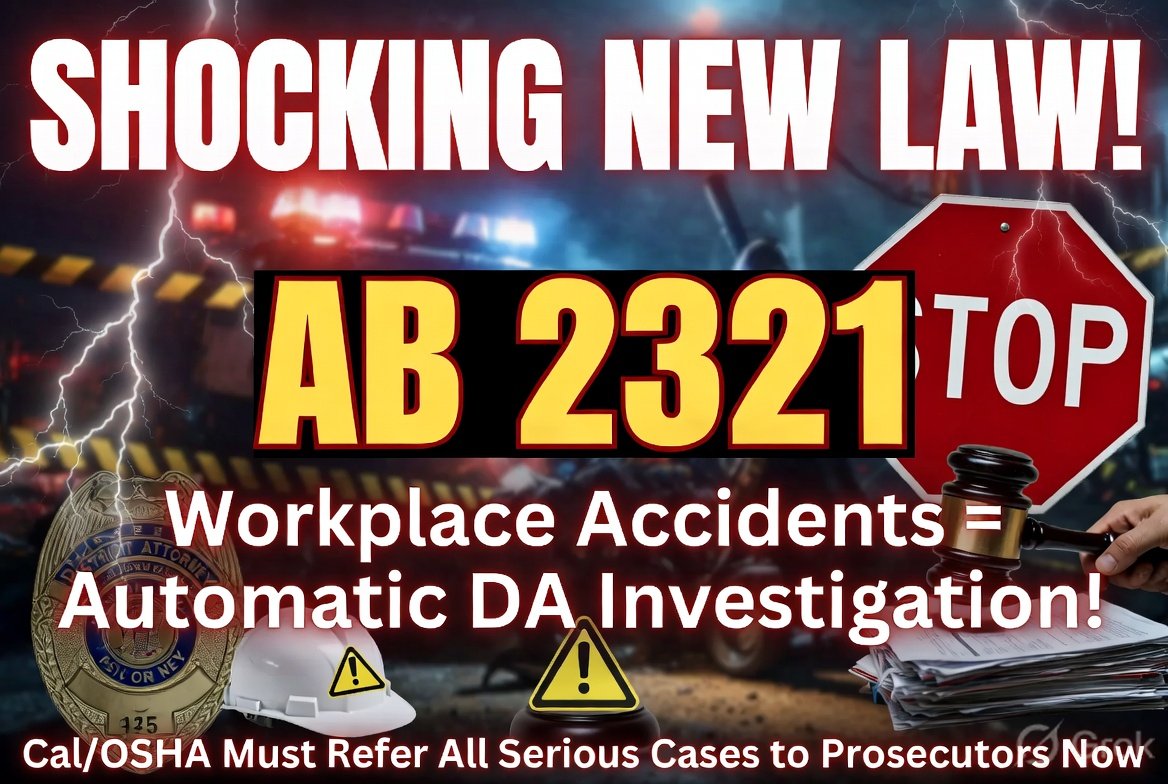
Workplace safety laws in the United States continue to evolve, and one proposal drawing significant attention is AB 2321, a bill that would require certain workplace accident investigations to be referred to district attorneys. If passed, this legislation could reshape how serious workplace incidents are handled—especially when negligence or misconduct is suspected.
For employers, safety officers, HR professionals, and workers alike, understanding AB 2321 isn’t optional—it’s essential. This guide breaks down what the bill proposes, why it matters, and how you can prepare for potential changes.
What Is AB 2321?
AB 2321 is a proposed legislative measure aimed at strengthening accountability in workplace safety enforcement. At its core, the bill would:
- Require regulatory agencies to refer serious workplace accident investigations to district attorneys
- Increase the likelihood of criminal prosecution in cases involving negligence
- Enhance coordination between labor regulators and legal authorities
Why This Bill Matters
Traditionally, workplace safety violations are handled through civil penalties, fines, and corrective actions. AB 2321 signals a shift toward criminal accountability, especially in cases involving:
- Fatal workplace incidents
- Severe injuries due to negligence
- Repeated safety violations
This means companies could face not just fines—but legal prosecution.
Key Provisions of AB 2321
Let’s break down the most important aspects of the bill.
1. Mandatory Referrals to District Attorneys
Under AB 2321, when a serious workplace accident occurs, investigating agencies must determine whether the case should be referred to a district attorney.
What qualifies as “serious”?
- Fatalities
- Life-threatening injuries
- Incidents involving willful negligence
2. Increased Legal Scrutiny
The bill encourages deeper investigation into whether:
- Safety protocols were ignored
- Employers failed to act on known hazards
- There was intentional disregard for worker safety
3. Stronger Enforcement Mechanisms
Instead of stopping at administrative penalties, the process would extend to:
- Criminal investigations
- Potential charges against employers or responsible individuals
- Court proceedings if negligence is proven
How AB 2321 Impacts Employers
If AB 2321 becomes law, businesses will face a higher level of accountability than ever before.
Immediate Impacts
- Increased inspections and audits
- More detailed accident investigations
- Greater documentation requirements
Long-Term Impacts
- Higher legal risks
- Increased insurance costs
- Reputation damage in case of violations
What Employers Must Do Now
To stay compliant and minimize risk, companies should:
- Audit Current Safety Protocols
Ensure all workplace safety standards are up to date. - Train Employees Regularly
Conduct safety drills and compliance training. - Document Everything
Maintain records of:- Safety checks
- Incident reports
- Employee training sessions
- Establish Clear Reporting Systems
Encourage employees to report hazards without fear.
What It Means for Employees
AB 2321 isn’t just about enforcement—it’s also about worker protection.
Benefits for Workers
- Greater accountability for unsafe practices
- Stronger legal backing in case of negligence
- Increased transparency in investigations
Employee Responsibilities
Workers also play a role in workplace safety:
- Follow established safety protocols
- Report unsafe conditions immediately
- Participate in training programs
The Shift Toward Criminal Accountability
One of the most significant aspects of AB 2321 is the move from civil penalties to criminal consequences.
Before AB 2321
- Fines and penalties were the primary enforcement tools
- Limited legal consequences for employers
After AB 2321 (If Passed)
- Potential criminal charges
- Personal liability for company leaders
- Court trials for severe violations
This shift sends a clear message: Workplace safety is not optional—it’s a legal obligation.
Industries Most Affected
While all industries must comply, some sectors will feel the impact more strongly.
High-Risk Industries
- Construction
- Manufacturing
- Warehousing
- Oil and gas
- Transportation
Why These Industries?
These sectors have:
- Higher accident rates
- Greater exposure to hazardous conditions
- Complex safety requirements
Practical Steps to Prepare for AB 2321
Preparation is key. Here’s a practical checklist for businesses.
Compliance Checklist
- ✅ Conduct a full safety audit
- ✅ Update safety manuals
- ✅ Train supervisors on legal responsibilities
- ✅ Implement incident reporting systems
- ✅ Review insurance policies
Build a Safety-First Culture
Creating a culture of safety reduces risk significantly.
How to do it:
- Reward safe behavior
- Encourage open communication
- Lead by example at the management level
Common Mistakes Employers Must Avoid
Even well-intentioned companies can make costly errors.
Top Mistakes
- Ignoring Minor Incidents
Small issues can escalate into major accidents. - Lack of Documentation
Without records, defending against claims becomes difficult. - Inadequate Training
Untrained employees are more likely to cause or suffer accidents. - Delayed Response to Hazards
Slow action can be interpreted as negligence.
Legal and Financial Implications
AB 2321 could significantly increase both legal exposure and financial risk.
Potential Consequences
- Criminal charges
- Hefty fines
- Lawsuits from affected employees
- Increased insurance premiums
Risk Mitigation Strategies
- Hire safety compliance experts
- Conduct regular legal reviews
- Invest in safety technology
The Role of Management and Leadership
Leadership plays a crucial role in compliance.
Responsibilities of Leaders
- Set safety standards
- Allocate resources for compliance
- Ensure accountability across all levels
Why Leadership Matters
A strong leadership commitment to safety can:
- Reduce accidents
- Improve employee morale
- Protect the company from legal risks
Future Outlook: What Happens Next?
AB 2321 reflects a broader trend toward stricter workplace safety enforcement.
Possible Future Developments
- More states adopting similar laws
- Increased federal involvement
- Higher penalties for violations
Businesses that adapt early will be better positioned to handle these changes.
Final Thoughts: Why You Should Act Now
AB 2321 is more than just another workplace regulation—it represents a fundamental shift in how workplace safety is enforced.
Ignoring it could lead to:
- Legal trouble
- Financial losses
- Damage to your reputation
But taking proactive steps now can:
- Protect your employees
- Strengthen your business
- Ensure long-term compliance